
30-Year Mortgage Rates Fall To 6.25%, Refinance Applications Rise 18%
At a glance: The latest mortgage rate drop and how it could affect refinancing decisions.
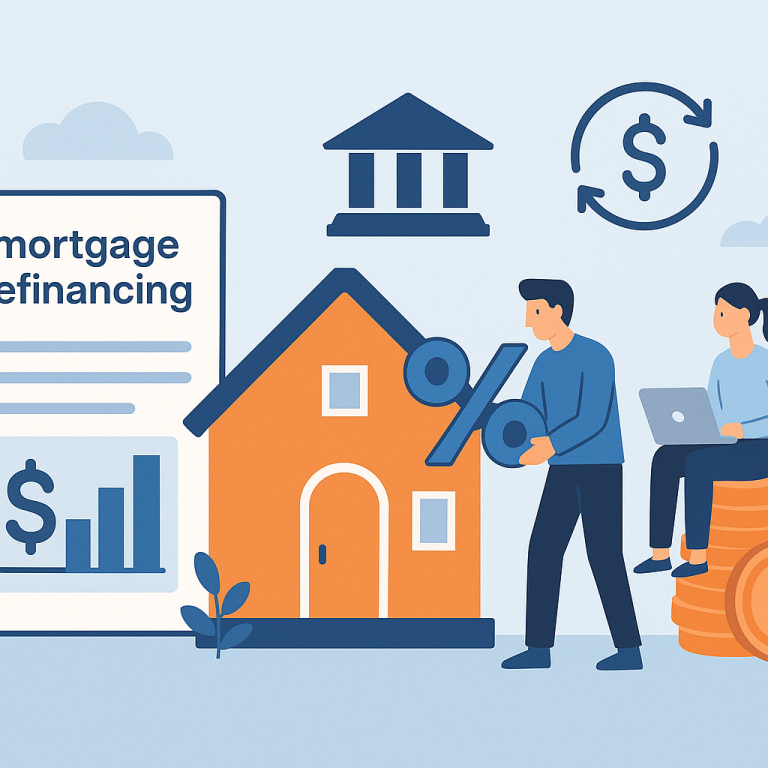
Mortgage rates have moved lower. That can improve affordability and may reopen refinance options for borrowers whose current rate is above today’s quotes.
What the Rate Drop Means for Borrowers
Homeowners with adjustable-rate mortgages (ARMs) face a recurring question as interest-rate cycles evolve: should they refinance to a fixed-rate mortgage to lock in predictable payments? The decision hinges less on headlines and more on a handful of personal and market factors that determine whether the stability of a fixed rate justifies the costs and effort of refinancing.
Refinancing from an ARM to a fixed-rate loan is primarily a tradeoff between predictability and cost. ARMs typically offer lower initial rates but expose borrowers to rate resets that can increase monthly payments. A fixed-rate loan eliminates that variability, which can be especially valuable for households that prioritize budgeting certainty or expect rates to rise over their remaining ownership horizon.
Key factors homeowners should evaluate include current mortgage balance and remaining term, how long they plan to stay in the property, closing costs and fees, and the borrower’s credit profile. Each of these elements affects whether the benefits of a fixed rate outweigh the direct and indirect costs of refinancing.
How to approach the decision
First, clarify your time horizon. If you expect to sell or refinance again in the near term, the upfront costs of refinancing may not be recouped. Conversely, if you plan to remain in the home for several years, locking in a stable payment can provide peace of mind and protection against future rate increases.
Second, assess home equity and loan-to-value. Sufficient equity broadens refinance options and can reduce required mortgage insurance or allow access to more favorable fixed-rate terms. Limited equity may constrain choices or raise costs, making a refinance less attractive.
Third, calculate the break-even point — the time it takes for monthly savings or reduced risk to offset closing costs. If the time to break even is comfortably shorter than your intended ownership period, refinancing is more likely to be worthwhile. When uncertain about assumptions, run conservative scenarios to test how changes in rates or plans affect the outcome.
Fourth, consider rate structure and alternatives. Some borrowers move from an ARM to a fixed 30-year loan to maximize payment stability, while others choose a shorter fixed term to reduce total interest at a slightly higher monthly cost. Hybrid options or refinancing to another ARM with a longer initial fixed period can be a middle ground for those seeking limited near-term protection.
Practical steps before refinancing
- Compare offers from multiple lenders to identify competitive rates and fee structures.
- Review your credit report and address issues that could affect the new rate or cost.
- Request a detailed loan estimate to understand all closing costs and any prepayment penalties.
- Model different scenarios for rates and time in the home to test sensitivity of outcomes.
- Weigh non-financial benefits, such as reduced payment volatility and simplified budgeting.
Homeowner takeaways
- Refinancing to a fixed-rate mortgage is generally more compelling for homeowners who plan to stay in their home for several years and value payment predictability.
- Evaluate all costs — not just the headline rate — and calculate a conservative break-even timeline before proceeding.
- Strong equity and credit profile increase the likelihood of favorable fixed-rate offers; limited equity may narrow options.
- Consider term length and alternative loan structures to balance monthly cost with long-term interest savings.
- Get multiple lender quotes and a clear loan estimate to compare apples-to-apples before making a commitment.
Refinancing from an ARM to a fixed-rate mortgage can be a prudent move for many homeowners seeking stability, but the decision should be based on a careful assessment of personal circumstances, costs, and time horizon rather than on prevailing headlines alone.
META: refinance, fixed-rate, ARM, homeowner guidance