30-Year Fixed Mortgage Rates Fall To Six-Month Low; Refinancing Applications Surge 22%
Refinancing Uptick as Rates Stabilize Prompts Homeowners to Reassess Break-Even
Mortgage refinancing activity has shown renewed movement as interest rates stabilize after recent volatility. Lenders are increasingly competitive on pricing and fees, while homeowners are re-evaluating whether refinancing aligns with their financial goals. The current environment favors borrowers who carefully weigh closing costs, remaining loan term and the length of time they plan to stay in their homes.
What’s driving renewed interest
With headline rate swings moderating, more homeowners are able to get reliable rate quotes and consider the practical benefits of refinancing. Loan officers report a mix of borrowers seeking lower monthly payments, shorter loan terms, or access to home equity for debt consolidation or home improvements. At the same time, lenders are offering more transparent fee structures and digital tools that simplify comparison shopping.
Key factors homeowners should evaluate
Refinancing can deliver meaningful savings or improved cash flow, but the outcome depends on several interconnected factors. Homeowners should examine:
- Break-even horizon: Compare total closing costs to projected monthly savings to estimate how long it will take to recoup upfront expenses.
- Remaining mortgage term: Shortening the term can increase monthly payments even while lowering overall interest; extending or resetting the amortization may reduce payments but increase lifetime interest.
- Available equity: Sufficient home equity expands refinancing options and avoids private mortgage insurance; low equity may limit choices or increase cost.
- Credit profile and documentation: Strong credit and organized paperwork typically secure more favorable loan offers and lower fees.
- Loan type and features: Fixed-rate versus adjustable-rate, and the presence of prepayment penalties or rate locks, can materially affect outcomes.
Practical steps before applying
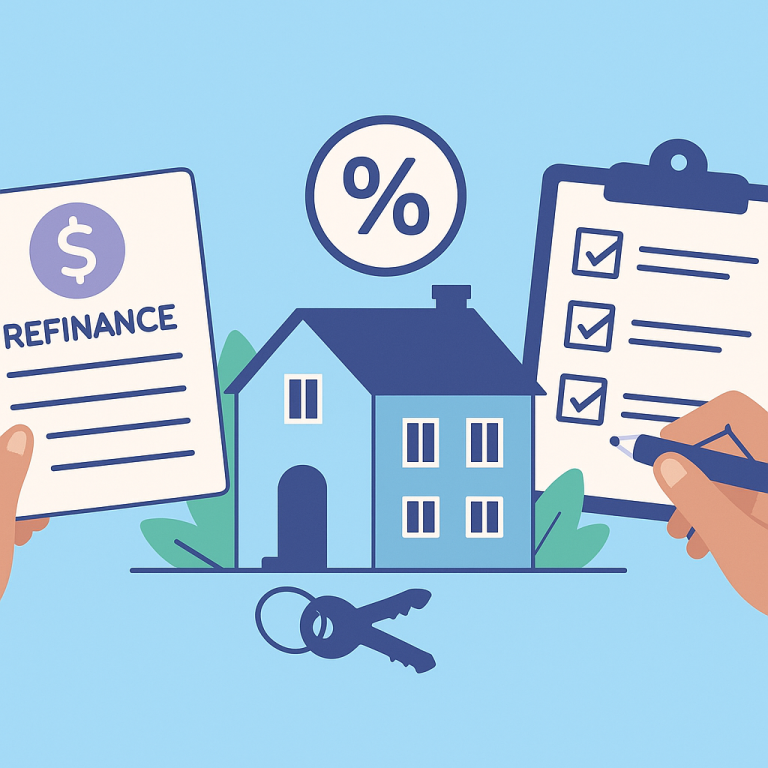
Homeowners preparing to refinance should take a methodical approach. Start by gathering recent mortgage statements, tax assessments and proof of income. Use multiple lenders or an online marketplace to obtain comparative loan estimates, and ask for breakdowns of closing costs and any third-party fees. Consider how long you expect to remain in the property and whether the refinance objective is monthly savings, debt consolidation, or a shorter payoff horizon.
Homeowner takeaways
- Stabilizing rates have improved the reliability of quotes, making it a practical time to shop for refinancing offers.
- Calculate a realistic break-even period before deciding; that timeframe should align with your expected time in the home.
- Decide whether priority is lower monthly payment, reduced loan term, or cash-out access—each goal requires different loan structures.
- Compare multiple lenders and request itemized estimates to understand upfront costs and long-term interest implications.
- Be mindful of credit and documentation; small improvements in credit or reducing outstanding debt can lead to better offers.
In a market where pricing is more consistent, homeowners who plan carefully and compare offers can make refinancing a useful tool to reshape their mortgage obligations. The best choice depends on individual goals, the balance of costs and savings, and the expected timeline for staying in the property.
META: refinancing, mortgage news, homeowner takeaways, break-even analysis, loan shopping