Refinance guide refinance if you’re underwater options and workarounds
Refinancing When You’re Underwater: Options and Workarounds
Being “underwater” (or “upside down”) means you owe more on your mortgage than your home is currently worth. That can make refinancing feel impossible — but there are several legitimate pathways and workarounds that may let you lower your rate, reduce monthly payments, or stabilize your mortgage situation. This article explains when refinancing makes sense, the benefits and drawbacks, typical costs, a step-by-step process, common pitfalls, and a short FAQ for homeowners exploring options.
What it is and when refinancing makes sense
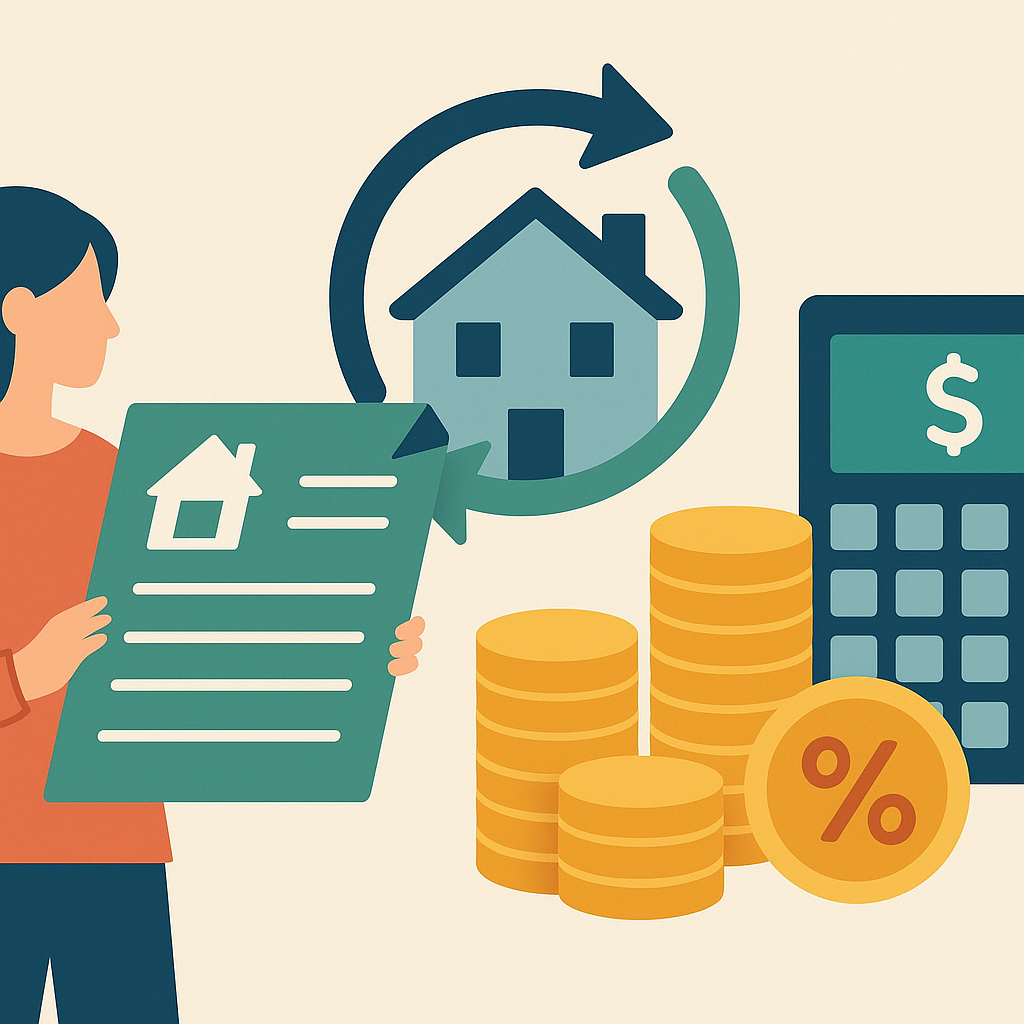
Refinancing when underwater means replacing your existing mortgage with a new loan even though your loan balance exceeds your home’s market value. It makes sense when:
- You can reduce your monthly payment or interest rate enough that the savings justify the costs.
- You need a more stable payment (e.g., move from an adjustable-rate to a fixed-rate mortgage).
- You qualify for a government or program streamline refinance that waives appraisal or equity requirements.
- A loan modification or government relief isn’t available and you want to avoid delinquency or foreclosure.
Common options and workarounds
Options vary by loan type, payment history, and lender policies. Major pathways include:
- Streamline refinances for government loans: If you have an FHA, VA or USDA loan, each program offers streamline or streamlined-assist refinancing that can allow refinancing with little or no equity and sometimes without an appraisal. Requirements typically include being current on payments and meeting seasoning rules.
- Conventional low-equity refinance options: Fannie Mae and Freddie Mac and many lenders offer programs to refinance borrowers with high loan-to-value ratios, subject to history of on-time payments and loan seasoning.
- Loan modification: If refinancing isn’t available, servicers can sometimes modify loan terms—lowering the rate, extending the term, or deferring principal—to make payments affordable.
- Cash-in refinance: Bring funds to closing to reduce the loan-to-value ratio and qualify for conventional refinancing. This requires liquidity but may eliminate private mortgage insurance (PMI).
- Non-QM or portfolio lenders: Some private lenders will refinance high-LTV loans or make specialized offers, typically at higher rates and with stricter underwriting.
- Short sale, deed-in-lieu, or strategic alternatives: If saving the property isn’t possible, these are last-resort options to avoid foreclosure and mitigate damage to credit.
Benefits and drawbacks
Benefits:
- Lower monthly payment or interest rate.
- Move to a fixed-rate product for predictability.
- Access to more favorable loan terms or forgiveness through modification programs.
- Potentially avoid foreclosure and stabilize finances.
Drawbacks:
- Closing costs and fees can be significant and may outweigh short-term savings.
- Refinancing underwater can extend the time it takes to build equity.
- Some programs (e.g., FHA) carry mortgage insurance that increases costs.
- Non-conventional lenders may charge higher rates or fees.
Costs and fees to expect
Typical costs for refinance include origination fees, appraisal (may be waived in some streamline programs), title and recording fees, escrow and prepaid interest, and any mortgage insurance premiums. Expect closing costs generally in the range of 2%–5% of the loan amount on a standard refinance. Specifics to watch for:
- FHA: upfront mortgage insurance premium (UFMIP) around 1.75% (can often be rolled into the loan) and an annual MIP.
- VA: IRRRL (VA streamline) may have a funding fee that can sometimes be financed into the loan; no private mortgage insurance.
- USDA: may allow streamlined refinancing with fees and guarantee requirements.
- Appraisal: waived in many streamline programs but required for conventional refinances at high LTVs.
Step-by-step refinancing process
1. Review loan type and eligibility: Determine whether you have an FHA, VA, USDA, or conventional loan and whether you meet any program-specific rules (seasoning, payment history).
2. Gather documentation: Pay stubs, tax returns, bank statements, current mortgage statement, and proof of homeowner’s insurance.
3. Shop lenders and compare offers: Look beyond rate—compare APR, closing costs, mortgage insurance, and any lender-specific programs for high-LTV borrowers.
4. Submit application: Complete the refinance application with your chosen lender and provide all requested documents.
5. Underwriting and appraisal (if required): The lender reviews credit, income, and asset documentation. An appraisal may be ordered unless you qualify for a streamline program that waives it.
6. Closing disclosure and closing: Review the closing disclosure for costs and terms, sign final paperwork, and fund the transaction. Some refinances allow the lender to roll costs into the loan or offer “no-closing-cost” options with higher rates.
7. Post-close: Confirm old loan was paid off and set up new payment arrangements. Monitor mortgage statements and escrow accounts.
Common pitfalls to avoid
- Ignoring the break-even point: If closing costs exceed savings for many years, refinancing may not be worthwhile. Calculate months to break-even = closing costs ÷ monthly savings.
- Missing program requirements: Streamline refis often require a history of on-time payments and a minimum time since loan origination.
- Overlooking mortgage insurance: Moving into an FHA loan can lower your rate but add MIP that offsets savings.
- Falling for high-cost “solutions”: Watch out for predatory lenders promising refinancing regardless of equity without clear terms or unaffordable rates.
- Not considering alternatives: Sometimes a loan modification or targeted forbearance is a better short-term fix than refinancing.
Short FAQ
Can I refinance if my home is worth less than what I owe?
Yes—under certain conditions. If you have an FHA, VA, or USDA loan you may qualify for streamline programs that allow refinancing with little or no equity. Some conventional lender programs also help high-LTV borrowers, usually with stricter requirements.
Is HARP still available for underwater borrowers?
No. The Home Affordable Refinance Program (HARP) ended in 2018. Other programmatic and lender-specific options have since been developed for borrowers with little equity.
How long before I see savings after refinancing?
Calculate break-even months by dividing closing costs by your monthly savings. If the break-even point is shorter than how long you expect to stay in the home, refinancing likely makes sense.
What if I can’t refinance—what are alternatives?
Consider a loan modification through your mortgage servicer, temporary forbearance, a repayment plan, or, if necessary, a short sale or deed-in-lieu to avoid foreclosure. Speaking with a HUD-approved housing counselor can help weigh options.
Refinancing while underwater is more challenging than when you have equity, but multiple legitimate paths exist depending on your loan type, payment history, and finances. Compare offers carefully, check break-even timing, and consult your lender or a housing counselor to choose the best route.
META: refinance underwater options, streamline refinance, FHA VA USDA refinance, loan modification, high LTV refinance, refinancing costs, break-even calculation