How to Calculate Your Mortgage Refinance Break-Even Point in 2026
Refinancing your mortgage can lower your monthly payment and save thousands over the life of your loan. But those savings do not come free. Closing costs, appraisal fees, and other expenses can add up to thousands of dollars upfront. Before you commit to a refinance, you need to know how long it will take for your savings to cover those costs. This is called your break-even point. Understanding this calculation helps you decide whether refinancing makes financial sense for your specific situation in 2026.
What a refinance break-even point means
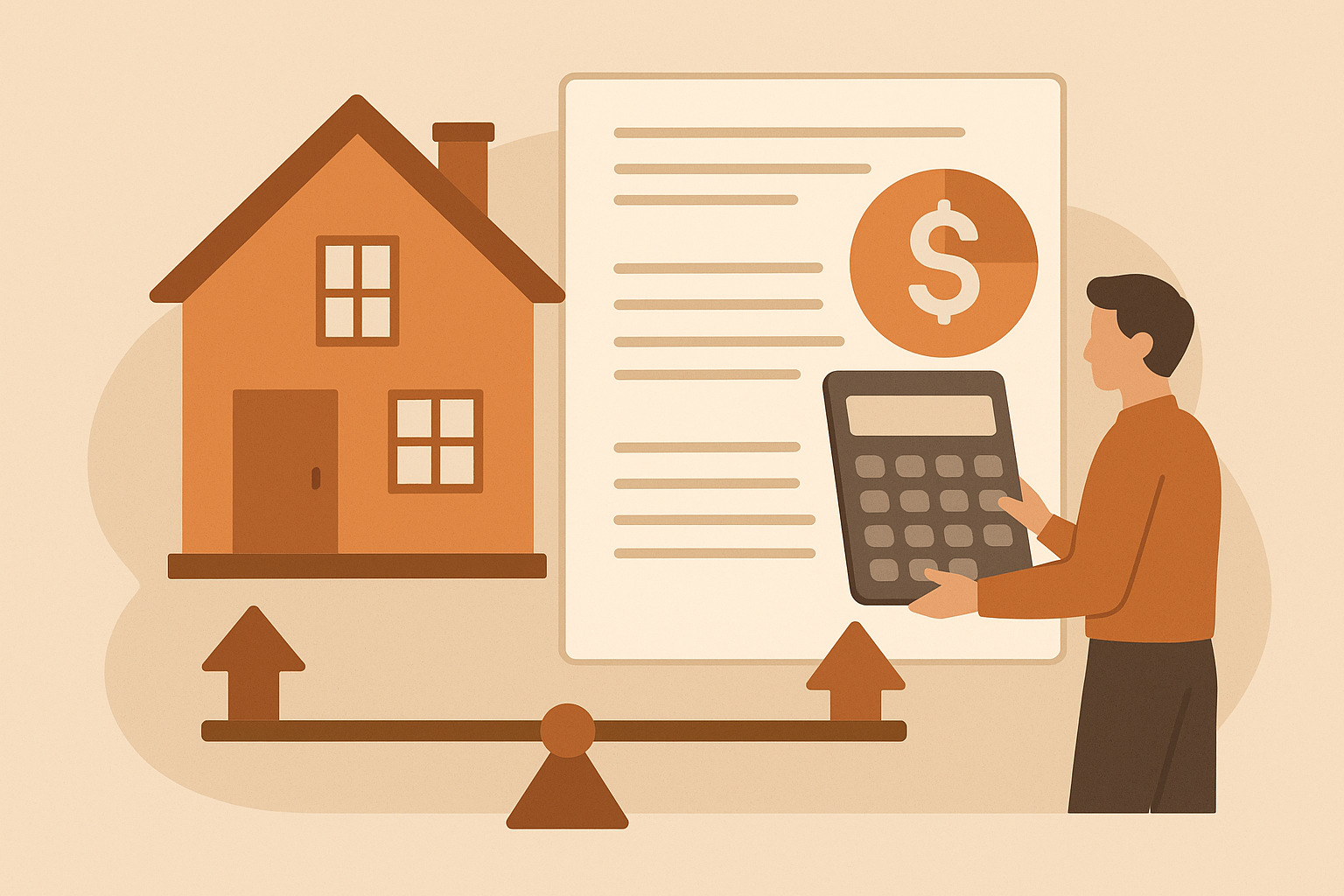
The break-even point is the moment when your total savings from refinancing equal the total costs you paid to complete the refinance. After you reach this point, every dollar you save is pure profit. Before you reach it, you are still recovering what you spent to get the new loan.
Think of it like buying energy-efficient windows for your home. The new windows cost money today, but they lower your monthly utility bills. Eventually, the savings on your electricity bill add up to the amount you spent on the windows. That is your break-even point. Mortgage refinancing works the same way.
Why does this matter in 2026? Interest rates have shifted significantly from the highs of recent years. Many homeowners are seeing rate offers below six percent, down from seven or eight percent on their current loans. The potential monthly savings are substantial, but only if you stay in your home long enough to break even on the costs.
The costs you must include in your calculation
To calculate your break-even point accurately, you need a complete list of all costs associated with refinancing. Some of these are obvious. Others are easy to overlook.
The largest expense is usually the loan origination fee. This is what the lender charges to process your new loan, typically one percent of the loan amount. On a three-hundred-thousand-dollar mortgage, that is three thousand dollars right away.
Next comes the appraisal fee. Lenders require a professional appraisal to confirm your home’s current value. This usually costs between five hundred and eight hundred dollars. You pay this upfront, even if you do not complete the refinance.
Title search and title insurance protect the lender against ownership disputes. Together these add another one thousand to two thousand dollars depending on your location and loan size. Credit report fees, recording fees with your county, and attorney fees in states that require legal review add several hundred dollars more.
Do not forget prepaid items. These include interest that accrues between closing and your first payment, plus escrow deposits for property taxes and homeowners insurance. While these are not technically fees, you pay them at closing and they affect your total cash outlay. Include them in your break-even calculation if you want to know when you recover your full investment.
Step-by-step break-even formula
Calculating your break-even point requires only basic math. The challenge is gathering accurate numbers and using them consistently. Follow these steps to get a reliable result.
First, determine your total closing costs. Add up every fee you will pay at closing including origination, appraisal, title work, and prepaid items. Ask your lender for a loan estimate form, which lists these costs in detail. Round up slightly to account for unexpected charges.
Second, calculate your monthly savings. Subtract your new monthly payment from your current monthly payment. Use the principal and interest portions only. Ignore escrow for taxes and insurance because those costs remain similar regardless of which loan you have.
Third, divide your total costs by your monthly savings. The result is the number of months required to break even. If your costs are six thousand dollars and you save two hundred dollars per month, your break-even point is thirty months.
Remember that monthly savings can change over time. If you refinance from a thirty-year loan to a fifteen-year loan, your monthly payment might actually increase even at a lower rate. In that case, calculate savings based on total interest paid over the life of the loan rather than monthly payment reduction.
Example calculation using real numbers
Let us walk through a realistic example for a homeowner in 2026. Sarah currently has a thirty-year mortgage with a seven percent interest rate. Her remaining balance is two hundred eighty thousand dollars, and her monthly principal and interest payment is one thousand eight hundred sixty dollars.
She qualifies for a refinance at five point seven five percent. Her lender provides the following cost breakdown. The origination fee is one percent of her loan amount, which equals two thousand eight hundred dollars. The appraisal costs six hundred fifty dollars. Title insurance and related fees total one thousand four hundred dollars. Recording and administrative fees add another four hundred dollars. Prepaid interest for fifteen days comes to six hundred twenty dollars. Her total closing costs equal five thousand eight hundred seventy dollars.
Her new monthly principal and interest payment at five point seven five percent will be one thousand six hundred thirty-five dollars. This represents a monthly savings of two hundred twenty-five dollars.
To find her break-even point, Sarah divides her total costs by her monthly savings. Five thousand eight hundred seventy dollars divided by two hundred twenty-five dollars equals twenty-six point one months. She will break even in approximately twenty-six months, or just over two years.
After that point, she saves two hundred twenty-five dollars every month. Over the remaining twenty-eight years of her loan, that adds up to seventy-five thousand six hundred dollars in total savings.
When the break-even rule does not apply
The break-even calculation is a useful tool, but it is not the only factor to consider. Certain situations change the math or make the break-even point less relevant.
Consider these exceptions when evaluating your refinance decision:
- Cash-out refinancing changes the equation because you are borrowing more than you currently owe. The break-even calculation only applies to rate-and-term refinancing where the loan amount stays the same.
- Shorter loan terms like fifteen years often have higher monthly payments despite lower rates. Calculate total interest savings instead of monthly payment reduction.
- Adjustable-rate mortgages introduce uncertainty. Your rate and payment can change after the initial fixed period, making long-term break-even calculations less reliable.
- Planned home sale before break-even means you will not realize the savings. If you expect to move within two years and your break-even is three years, refinancing probably does not make sense.
- Removing mortgage insurance provides savings separate from rate reduction. Factor this benefit into your calculation if refinancing eliminates private mortgage insurance or FHA mortgage insurance premiums.
Another consideration is opportunity cost. The money you spend on closing costs could be invested elsewhere. If you can earn a higher return in the stock market or by paying down high-interest debt, the refinance savings become less attractive. Compare your break-even timeline against alternative uses for that capital.
Bottom line for homeowners in 2026
The refinancing environment in 2026 offers genuine opportunities for homeowners with higher-rate loans. Rates below six percent create meaningful monthly savings for many borrowers. But the decision to refinance should never be based on rate alone.
Calculate your break-even point using real numbers from lender estimates. Know exactly how much you will pay at closing and exactly how much you will save each month. Be honest about how long you plan to stay in your home. If your break-even point is three years and you expect to move in two, the refinance will cost you money overall.
Shop multiple lenders to compare closing costs, not just rates. A slightly higher rate with significantly lower fees might break even faster than the lowest rate with expensive origination charges. Get loan estimates from at least three lenders and run the break-even calculation for each offer.
Remember that refinancing resets your loan clock in some ways. If you have been paying your current mortgage for ten years, you have twenty years remaining. Refinancing to a new thirty-year loan lowers your monthly payment but extends your total repayment period. Consider a twenty-year or fifteen-year term instead to balance monthly savings with long-term debt freedom.
The break-even calculation gives you a clear timeline for recovering your investment. Use it as a primary tool in your refinance decision, but consider the complete financial picture including your long-term housing plans, other debt obligations, and investment opportunities. An informed decision today saves money for decades to come.